Porsche Wireless Charging: How Its New Inductive Technology Could Change EV Ownership
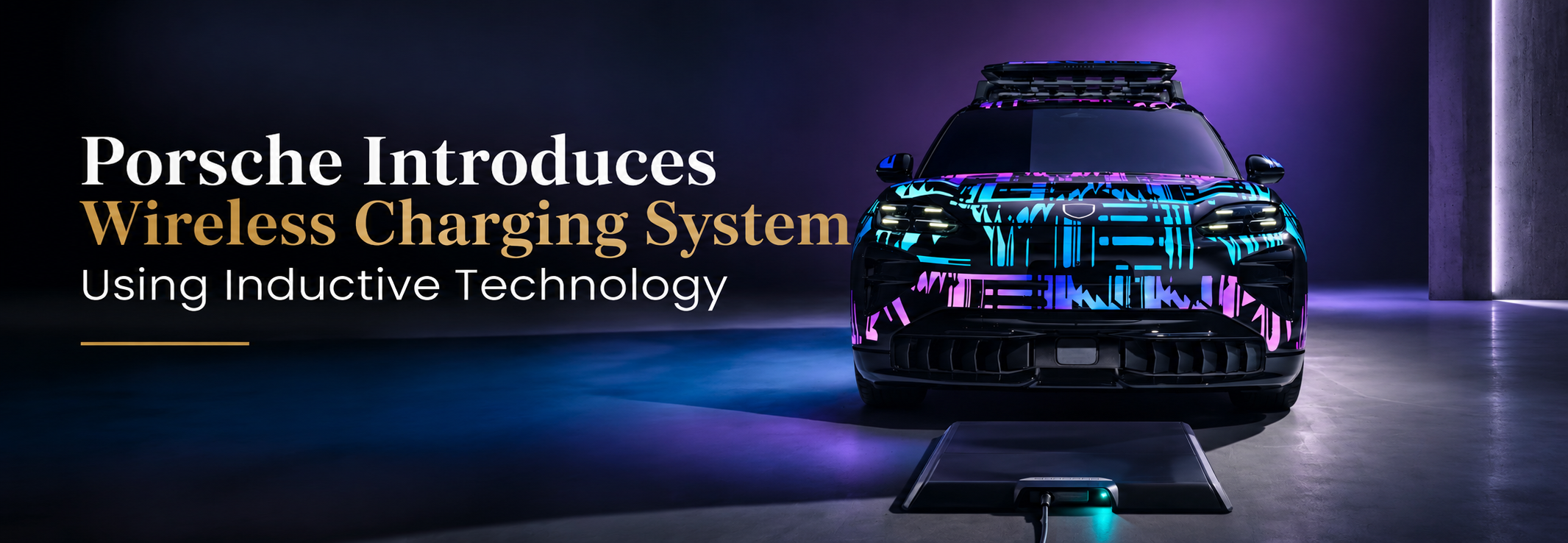
28 Oct 2026Charging an electric car at home could soon become as simple as parking it in the right place. Porsche is bringing this idea closer to reality with an inductive wireless charging system designed for the all-electric Cayenne.
Instead of connecting a conventional charging cable, drivers can park over a dedicated charging plate and transfer energy to the vehicle through an electromagnetic field. The system offers charging power of up to 11 kW, with an efficiency of more than 90% under the conditions specified by Porsche.
It is an important development for electric vehicle ownership. Home charging is already one of the most convenient ways to run an EV, but removing the need to handle a cable could make the everyday experience even simpler.
So, how does Porsche’s wireless charging technology work, how quickly can it charge an electric SUV, and what does it mean for the future of electric cars?
What Is Porsche Wireless Charging?
Porsche’s wireless charging system uses inductive charging, a technology that transfers electrical energy between two coils without requiring a physical cable connection.
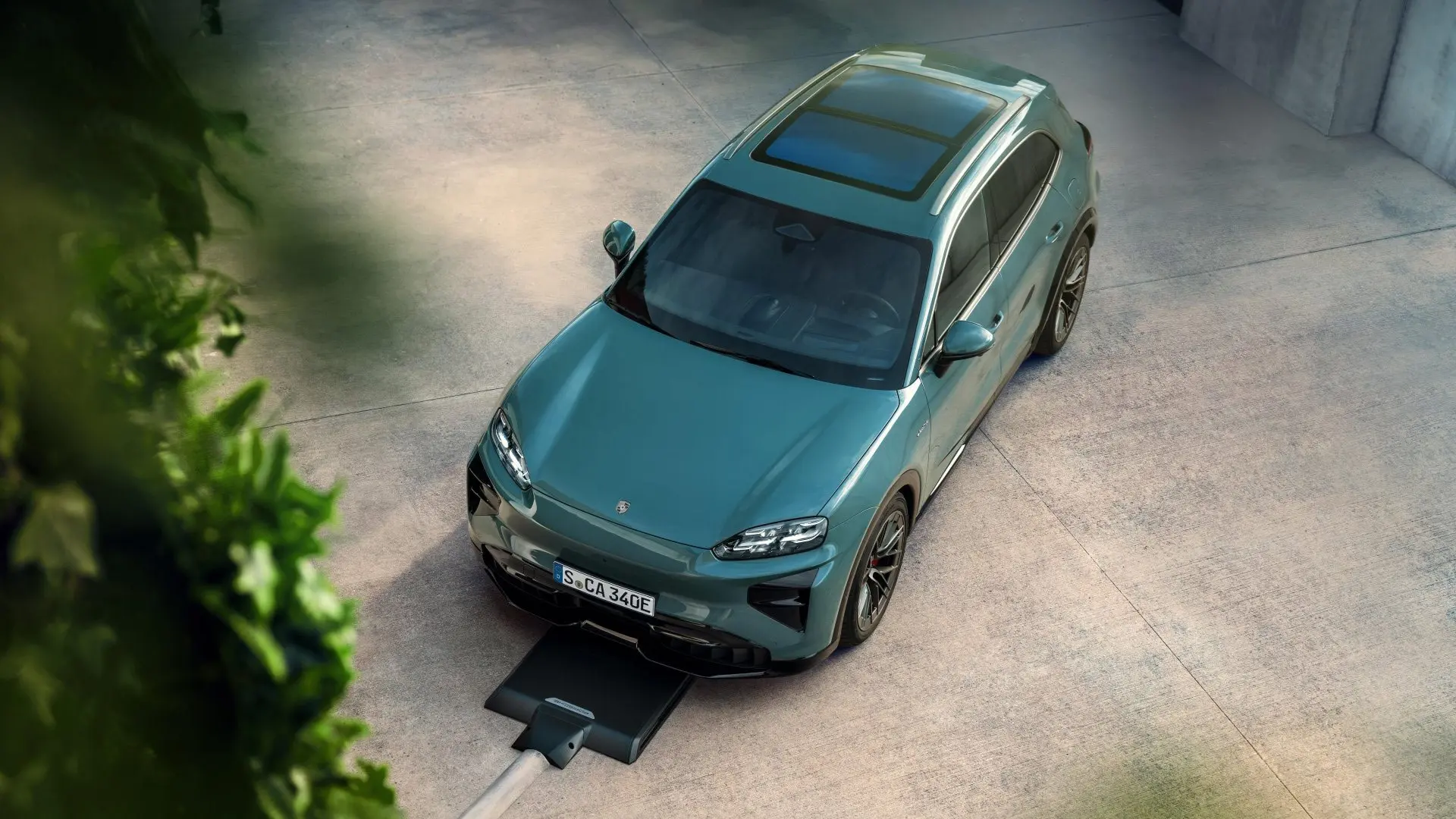
The system consists of two main components: a charging plate installed on the ground and a receiver integrated into the vehicle’s underbody. When the car is correctly positioned above the plate, energy transfers between the two components through a magnetic field.
The driver does not need to plug a charging connector into the car. Instead, the process begins once the vehicle is positioned correctly and the required conditions, including applying the parking brake, are met.
The system is being introduced as an optional feature for the all-electric Porsche Cayenne. Its initial rollout is taking place in stages across markets, so availability depends on the country and the vehicle’s specification.
This is not simply a convenience feature designed to eliminate cables. It represents a different approach to integrating EV charging into the places where people already park their cars.
How Does Inductive Charging Work?
The technology behind Porsche’s system is based on electromagnetic induction.
The ground-mounted charging plate contains a coil that generates an alternating magnetic field when supplied with electricity. A second coil, fitted to the vehicle, receives energy from that field. The vehicle’s charging electronics then convert the transferred energy into a form suitable for charging the high-voltage battery.
The process happens across a gap between the charging plate and the vehicle. Porsche’s system is designed to operate with a distance of approximately 12 to 18 centimetres between the two components.
Because the coils need to be positioned appropriately for efficient energy transfer, parking accuracy matters. Porsche addresses this through vehicle-based parking assistance, helping the driver position the Cayenne over the charging plate.
Once the vehicle is correctly aligned, charging can begin without the driver handling a cable or connecting a plug.
The system is designed to make this process straightforward enough for everyday use. Drivers park, allow the vehicle to align with the charging plate, and let the technology manage the transfer of energy.
How Much Power Can It Deliver?
Porsche’s wireless charging system supports charging power of up to 11 kW.
This places it in the category of AC home charging rather than the high-power DC rapid charging used at public charging stations. It is designed primarily for charging a vehicle while it is parked at home, such as overnight or during the working day.
The actual charging time will depend on several factors, including the vehicle’s battery state of charge, temperature, charging conditions and the amount of energy required.
For many owners, the main advantage is not necessarily faster charging. It is the ability to replenish the battery without having to connect a cable every time the car is parked.
A vehicle that spends several hours in a driveway or garage can use that time to charge, making it easier to start the next journey with sufficient battery range.
Porsche also states that the system can achieve energy-transfer efficiency of more than 90%. As with any charging technology, real-world performance can vary depending on operating conditions.
That efficiency is an important consideration because wireless charging introduces an additional energy-transfer stage compared with a conventional physical connection. Porsche’s system aims to make that process practical for routine home use.
Designed for the All-Electric Cayenne
The all-electric Cayenne is the first Porsche model to offer this optional inductive charging system.
The technology has been developed with the practical realities of a premium electric SUV in mind. Owners may use their vehicles for commuting, school runs, shopping and longer journeys, with the car spending much of its time parked between trips.
A wireless home charging system could fit naturally into this routine. Rather than taking a charging cable out of storage and connecting it to the car, the owner simply parks in the designated space.
The ground plate measures approximately 117 by 78 centimetres and is around six centimetres high. It weighs about 50 kilograms and is connected to the household electrical supply.
Unlike some home charging installations, the system does not require a separate wallbox or external control unit. The charging hardware is divided between the ground plate and the receiver integrated into the vehicle.
This does not mean installation is completely plug-and-play. The charging plate needs a suitable location and electrical connection, and installation should be carried out by a qualified professional or through Porsche’s installation service where available.
For homeowners who can dedicate a parking space to the system, it offers a new way to integrate charging into their property.
Safety Is a Key Part of the System
Wireless charging needs to do more than transfer energy efficiently. It must also operate safely around people, animals and everyday objects.
Porsche has incorporated detection features designed to identify foreign objects and living beings in the charging area.
Foreign object detection helps identify items such as metallic objects that could heat up when exposed to the electromagnetic field. Living object detection is designed to recognise the presence of people or animals in the relevant area.
If the system detects a potentially unsafe situation, charging can be interrupted.
The system also incorporates shielding measures to manage the electromagnetic field and protect the surrounding environment during operation.
These features are particularly important because the charging plate sits at ground level, where objects can be difficult to notice. Leaves, debris or other items may accumulate around an outdoor parking space, while pets and people can move through the area.
The technology is designed to account for these real-world conditions rather than assuming the charging space will always be perfectly clear.
Porsche also describes the charging plate as weatherproof and suitable for outdoor installation. It is designed to withstand normal exposure to the elements and can be driven over without significant damage under the intended conditions.
As with any electrical installation, the exact site requirements and installation instructions remain important.
How Does the Car Align With the Charging Plate?
Correct positioning is essential for inductive charging to work effectively.
Porsche uses the Cayenne’s parking assistance and Surround View system to help drivers position the vehicle above the ground plate. This reduces the need to judge the alignment entirely by eye.
Once the car is in the correct position and the required conditions are satisfied, the system can initiate charging.
The design also allows for a degree of positioning tolerance, so the vehicle does not necessarily need to be aligned with absolute precision. However, drivers still need to park within the system’s permitted operating area.
This is an important part of making wireless charging practical. If positioning were difficult or required repeated adjustments, the convenience advantage would quickly diminish.
By integrating alignment assistance into the vehicle, Porsche aims to make the process feel like a natural extension of parking rather than a separate charging procedure.
Managing Charging Through My Porsche
Wireless charging is also designed to work with Porsche’s connected digital services.
Through the My Porsche app and the associated vehicle functions, owners can access charging information and manage relevant settings. Depending on the market and configuration, features include monitoring charging activity, authorising vehicles to use the system and scheduling charging.
Scheduled charging can be useful for owners who want to manage when their vehicle draws electricity. It may also help them coordinate charging with household routines or available electricity tariffs.
The system can be integrated into the broader ownership experience rather than operating as an entirely separate piece of equipment.
Connectivity features also support software updates and system management, helping the technology remain integrated with the vehicle over time.
The precise functions available will depend on the market, software and vehicle configuration.
Wireless Charging Versus a Traditional Home Charger
A conventional home charger remains a practical and widely established way to charge an electric car. It provides a physical connection, and many owners are already comfortable using a charging cable as part of their routine.
Porsche’s wireless system changes that interaction.
Its main benefit is convenience. There is no charging connector to handle, no cable to unwind and no cable to put away after use. For drivers who charge at home almost every day, removing those small steps could make a noticeable difference over time.
However, wireless charging requires a dedicated ground plate and a compatible vehicle. Installation also needs to be planned around the parking space, electrical supply and property layout.
It is therefore not automatically the best choice for every EV owner. Someone who already has a suitable wallbox and is happy using it may find that a conventional system meets their needs perfectly well.
The wireless option is particularly interesting for buyers who value convenience and are planning a new charging installation around a compatible Porsche.
It is also worth remembering that an 11 kW wireless system serves a different purpose from high-power public DC charging. It is intended for charging while parked, not for replacing rapid charging during a long-distance journey.
What Could This Mean for the Future of Electric Cars?
Porsche’s system is significant because it moves wireless charging beyond a demonstration of what might be possible and into a real vehicle offering.
The wider appeal is easy to understand. Home charging works best when it fits naturally into daily life. Making the process simpler could encourage more drivers to use home charging consistently, provided they have access to suitable parking and electrical infrastructure.
The technology could be particularly relevant to premium vehicles, where owners may place a high value on convenience and seamless integration between the car and the home.
There are still practical considerations. Drivers need a compatible vehicle, a suitable installation and a parking space that works with the system. The cost of the optional technology and installation will also influence how attractive it is compared with a traditional charger.
Availability is another factor. Porsche is rolling out the system in stages, meaning it will not necessarily be available to every Cayenne Electric buyer in every market at the same time.
Nevertheless, the technology demonstrates how EV charging could evolve. Instead of treating charging as a separate activity that requires handling equipment, manufacturers are exploring ways to make it part of the parking experience itself.
Is Porsche Wireless Charging Worth Watching?
For Porsche owners, the appeal of inductive charging is straightforward: park the car, let the system establish the connection, and charge without plugging in.
The system offers up to 11 kW of charging power, more than 90% energy-transfer efficiency under the stated conditions, and safety features designed to manage foreign objects and living beings around the charging area.
Its success will ultimately depend on the everyday experience, installation requirements, pricing and availability in individual markets. But the concept addresses a real part of EV ownership: making charging easier to live with.
For buyers considering the all-electric Cayenne, wireless charging is a feature worth investigating when comparing specifications and planning a home charging setup.
It may not replace conventional charging solutions for everyone, and it is not designed to eliminate the need for public rapid charging on longer journeys. What it does offer is a glimpse of a more seamless approach to home charging, one where the simplest part of owning an electric car could be parking it.