Porsche Mission S: The Essence of the Sports Car Reinterpreted
22 Oct 2026Porsche has never needed to reinvent its identity to move forward. Its greatest cars have always balanced innovation with a familiar sense of purpose: distinctive proportions, purposeful engineering and a driving experience that puts the person behind the wheel first.
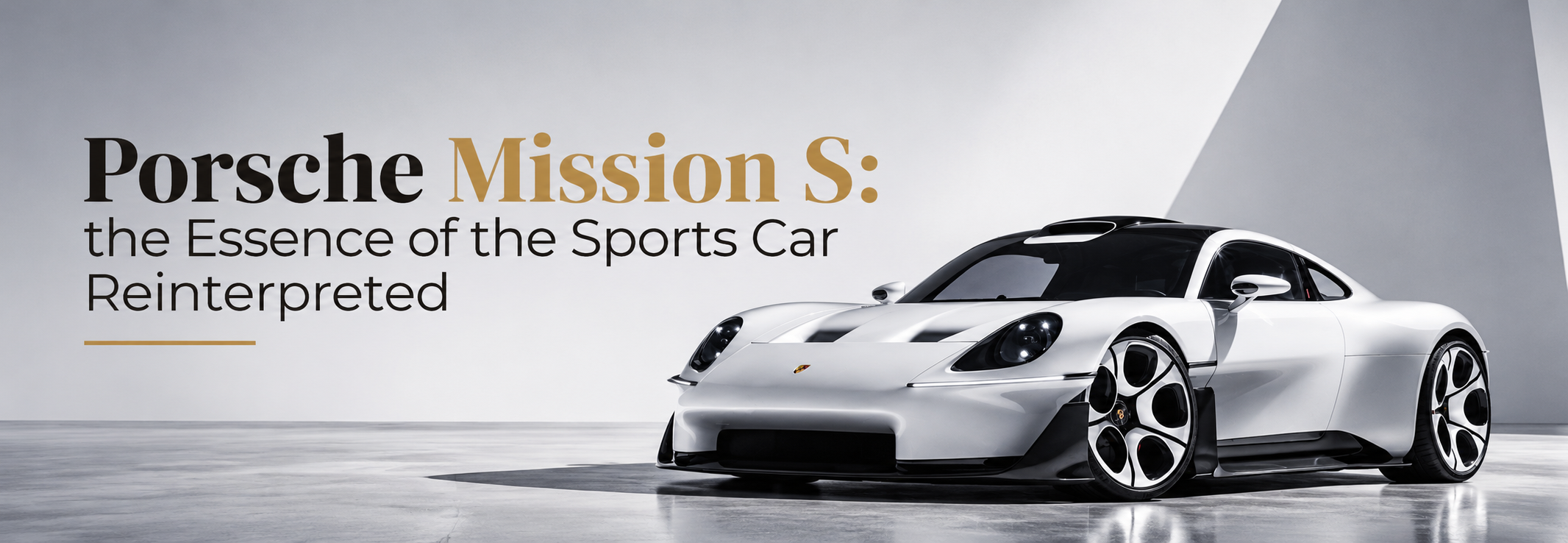
Now, with the Porsche Mission S, the brand is offering a glimpse of how those principles could shape its next chapter.
Presented as part of Porsche’s Sportwagenschmiede ’35 strategic realignment, the Mission S is a vision model that explores the future of the brand’s design language, interior philosophy and sports car architecture. It draws on some of Porsche’s most recognisable historic models while introducing ideas intended to influence future production cars.
At its heart is a clear message from Porsche: the sports car should continue to be immediately recognisable, emotionally engaging and engineered around the driver.
The Mission S also points towards something more substantial. Porsche has announced plans to develop a new mid-engined super sports car platform positioned above the iconic 911. Rather than creating a one-off hypercar, the company intends to establish a permanent addition to its model range.
That makes the Mission S more than a styling exercise. It offers an early indication of how Porsche sees the future of its sports cars.
What Is the Porsche Mission S?
The Porsche Mission S is a forward-looking concept that previews the next evolution of Porsche’s design identity and driver-focused interior philosophy.
According to Dr Michael Leiters, Chairman of the Executive Board of Porsche AG, the car demonstrates ideas and design features that will help shape future Porsche models. The vision combines a mid-engined super sports car layout with styling inspired by the company’s heritage and an interior designed to prioritise the connection between driver and vehicle.
The Mission S is not being presented as a confirmed production car with a defined specification, performance figures or launch date. Instead, it communicates a broader direction for the brand.
Its importance lies in the combination of several themes. The exterior retains familiar Porsche proportions, the cabin reduces reliance on permanently integrated digital displays, and the proposed mid-engined platform creates the possibility of a new model positioned above the 911.
For a manufacturer whose identity is closely tied to a handful of legendary sports cars, evolving without losing that identity is a considerable challenge. The Mission S suggests Porsche intends to approach that challenge by refining its established principles rather than abandoning them.
A Historic Setting for a Look into the Future
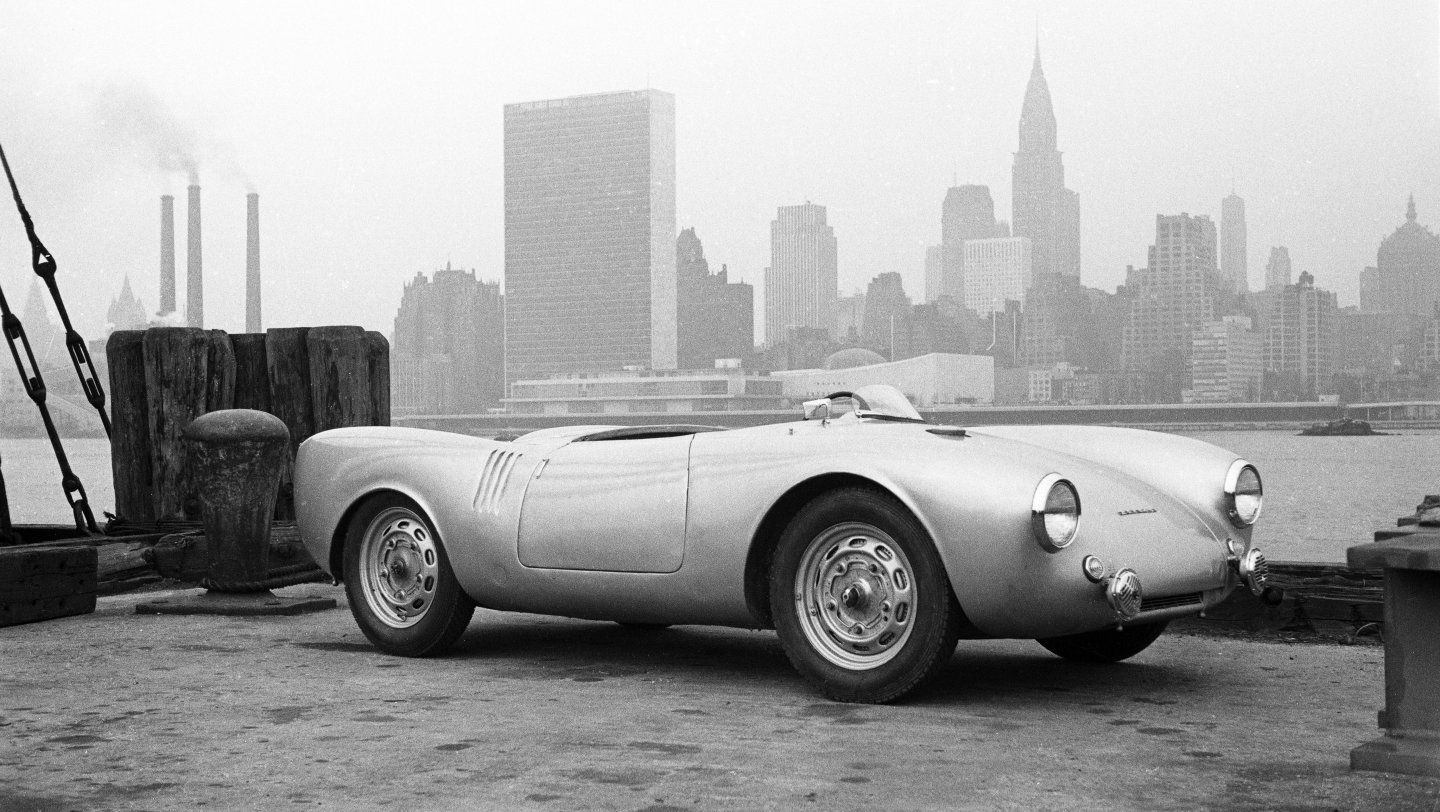
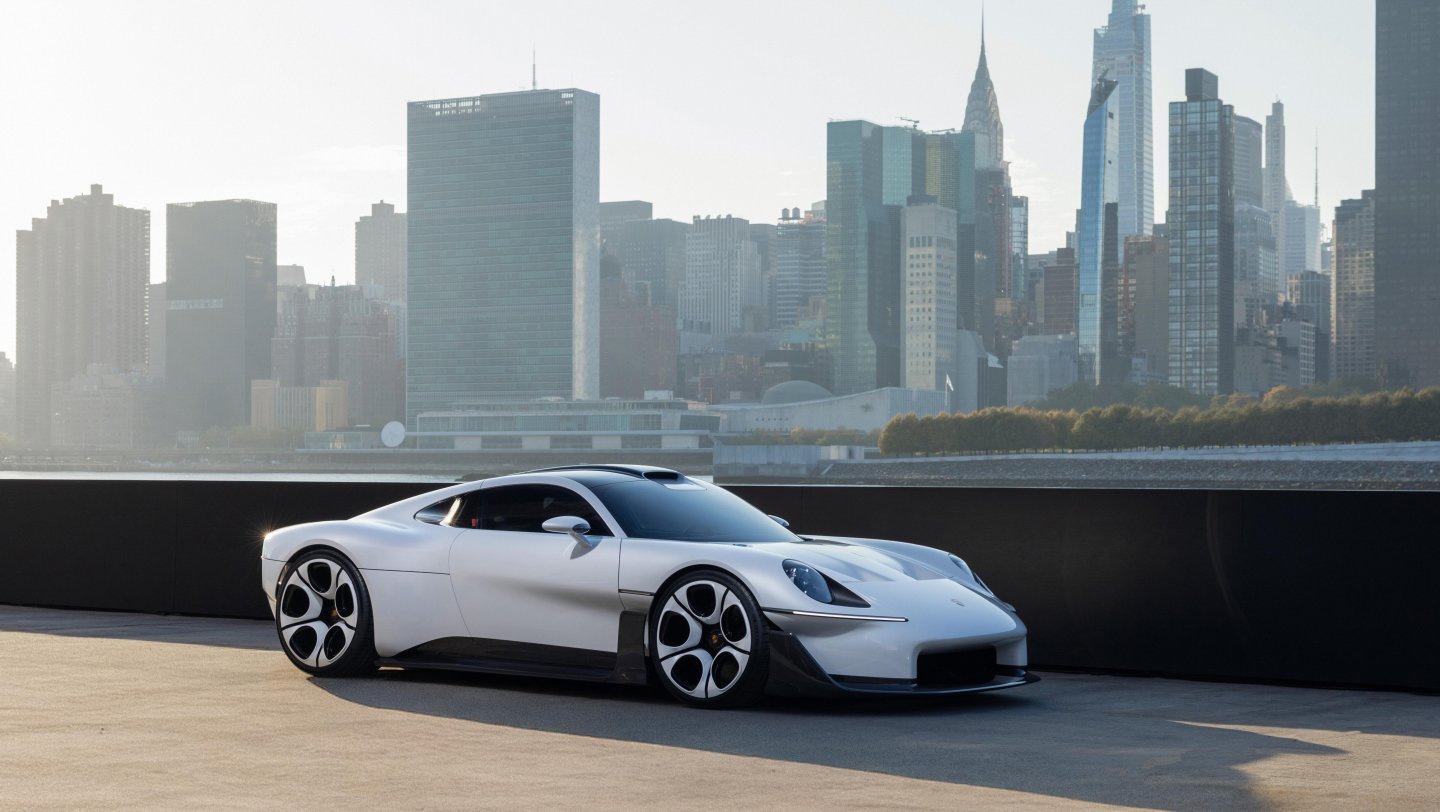
Porsche chose a location with considerable historical significance for the Mission S world premiere: a pier in Queens, New York, overlooking the Manhattan skyline.
The location recalls the early international story of the Porsche 550 Spyder. Photographs of the mid-engined sports car taken on the same pier in 1953 travelled around the world, helping introduce the model to a wider audience.
The 550 Spyder played an important role in establishing Porsche’s sporting reputation. Its compact proportions, mid-engined layout and motorsport achievements helped define characteristics that would become central to the brand’s identity.
By returning to this location, Porsche is drawing a connection between its past and the direction it wants to take in the future. The Mission S similarly looks back to historic models for inspiration while interpreting their defining features through a contemporary design language.
The connection is particularly relevant to the car’s mid-engined architecture. The 550 Spyder demonstrated how a focused sports car could be built around a centrally positioned engine, while the Mission S explores how that configuration could underpin a modern super sports car above the 911.
The message is not simply that Porsche wants to revisit its heritage. It is that the company’s history remains a source of ideas for future engineering and design.
Porsche’s Evolving Design Language: Authentic, Consequent and Timeless
Porsche describes the principles behind its future design direction using three terms: authentic, consequent and timeless.
The Mission S is intended to demonstrate what those principles mean in practice. Its design is recognisably Porsche, but it does not rely solely on reproducing familiar styling details. Instead, it reinterprets established shapes and proportions to create something that looks contemporary while retaining a clear connection to the brand’s history.
Tobias Sühlmann, Vice President of Style Porsche, describes the Mission S as the result of a forward-looking, holistic design strategy. The concept is intended to illustrate a direction that Porsche plans to translate into its future product portfolio.
This approach is important because the visual identity of a Porsche is often established by its proportions as much as by its individual details. The relationship between the bonnet, cabin, wheel arches and rear bodywork can make a car recognisable even before its badge comes into view.
The Mission S builds on that principle. Its surfaces are clean and sculptural, its stance is purposeful, and its individual design elements work together rather than competing for attention.
The result is a vision of future Porsche design that aims to feel new without becoming disconnected from the cars that established the brand.
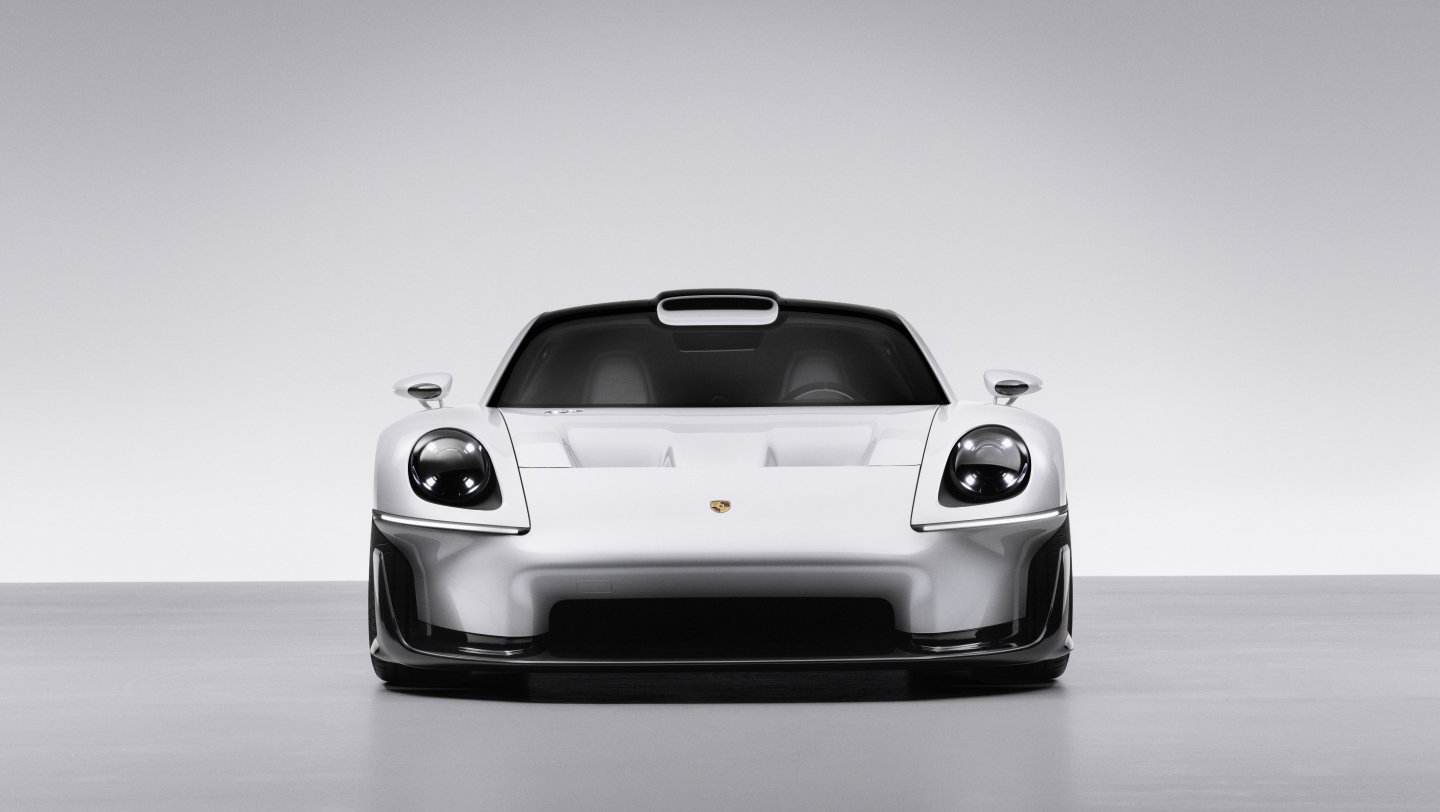
Exterior Design: Classic Porsche Proportions with a Modern Interpretation
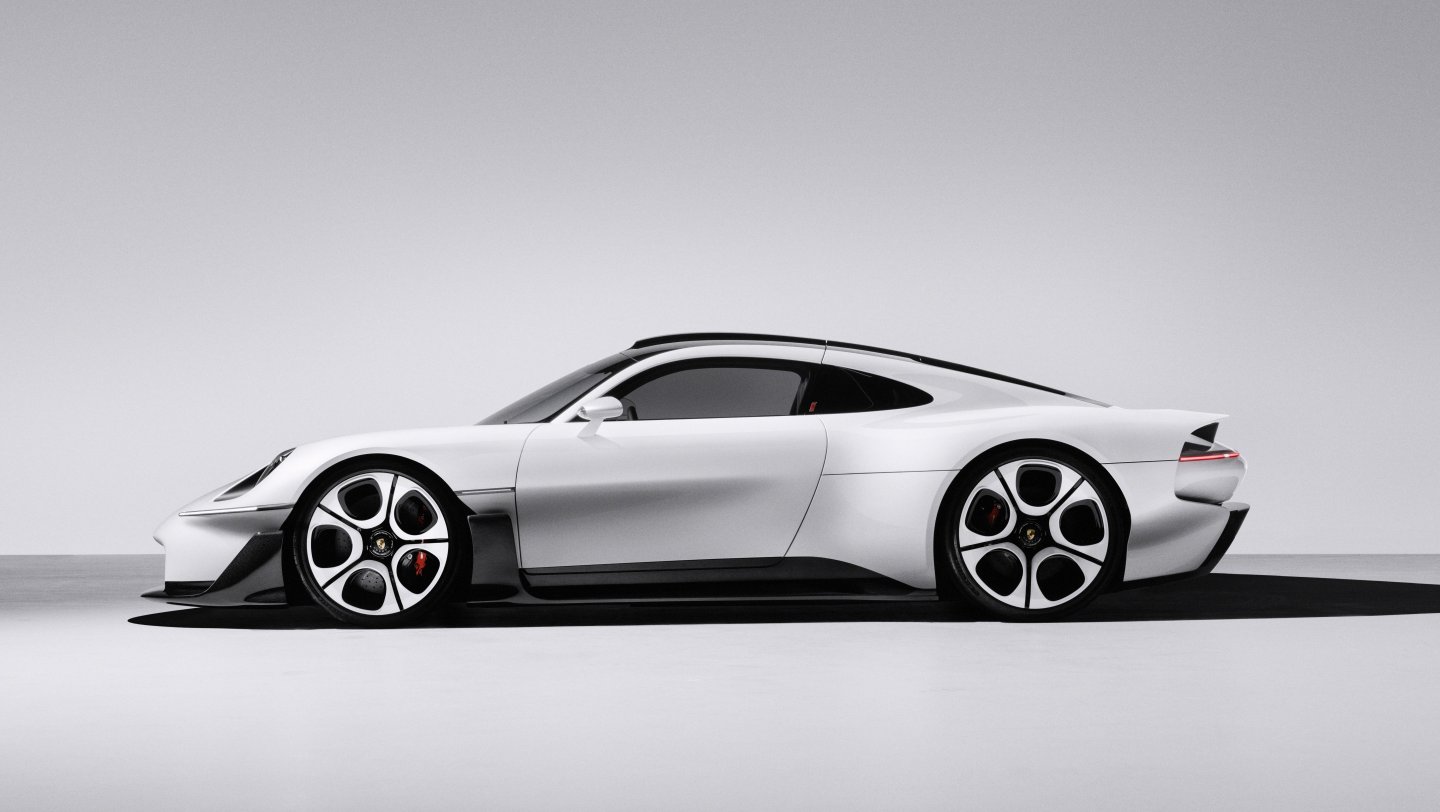
The Mission S has been designed around the proportions of a mid-engined sports car. Its stance, short overhangs and strongly defined wheel arches give it a planted appearance, while the flowing roofline creates a clear visual connection between the front and rear.
One of the defining features is the relationship between its upper and lower bodywork. Porsche describes these shapes as floating volumes, with flowing surfaces that appear to sit above the more technical elements beneath them.
This approach gives the car a sculptural appearance while allowing functional components to remain visible and purposeful. The upper surfaces communicate muscularity and movement, while the lower sections emphasise the engineering and lightweight construction associated with a performance-focused machine.
A continuous main line connects the lighting signatures at the front and rear. This creates visual consistency across the body and helps the car appear cohesive from different angles.
The design is distinctive, but its inspiration is rooted in Porsche’s established sports car vocabulary.
Round Headlights and Pronounced Front Wings
The front end draws on two of Porsche’s most familiar design characteristics: round headlights and strongly defined front wings.
These elements recall the 911, whose front proportions and lighting arrangement have become among the most recognisable features in the sports car world.
On the Mission S, however, the treatment is more contemporary. The lighting is integrated into a cleaner front design, while the pronounced wings emphasise the width and muscularity of the car.
The intention is to preserve the visual character of a Porsche without relying on a literal recreation of an older model.
Design References to the G Model, GT1 and 959
The Mission S brings together influences from several important Porsche models.
The way certain shut lines merge into the lighting graphics recalls the G-model 911. The low, flat front draws inspiration from the Porsche GT1, while the roofline beneath the rear wing references the Porsche 959.
These are not simply historical details added for nostalgia. Porsche has reinterpreted them within a single design, allowing familiar cues to contribute to a new overall shape.
The rear also incorporates a car-in-car concept derived from the GT1. This layered treatment creates a distinctive relationship between the main bodywork and the rear structure.
Together, these elements show how Porsche intends to use its history as a design resource rather than a template that future models must follow exactly.
A Mid-Engined Shape with Functional Aerodynamics
The Mission S’s central engine position plays a major role in its proportions.
A mid-engined layout allows Porsche to develop the familiar flowing roofline, or flyline, around a compact cabin and a strongly defined rear section. The architecture also gives the design a natural balance between the front and rear of the car.
Aerodynamic components are integrated into the wider visual concept. The active rear wing, for example, is designed to sit within the overall shape rather than appearing as an unrelated addition.
The car also features a cooling solution reminiscent of the radiator fan arrangement associated with the Porsche 917. This reference connects the Mission S to Porsche’s motorsport history while highlighting the relationship between engineering requirements and exterior design.
The broader philosophy is characteristic of Porsche: components should perform a practical function while contributing to the appearance of the vehicle.
Wheels Inspired by the Porsche 928
The wheels introduce another reference to the company’s past.
The Mission S uses a new interpretation of the distinctive dial-style wheel design associated with the Porsche 928. The concept has been developed with a clear emphasis on lightweight construction.
Wheels are an important part of a sports car’s overall character. Their design affects the visual relationship between the body and the road, while their construction can also influence performance.
On the Mission S, the wheel design supports the wider objective of combining familiar Porsche details with a more contemporary and technically focused appearance.
Inside the Porsche Mission S: A Return to Driver-Focused Design
The interior follows a philosophy that may seem surprising in an era when many new cars compete to offer the largest possible screens.
Rather than filling the dashboard with digital displays, Porsche has chosen to focus on the relationship between the driver, the controls and the driving experience.
The Mission S interior takes inspiration from historic sports cars such as the Porsche 550 Spyder and the 356. Two defining lines run through the dashboard and doors, creating a visual connection between the cockpit and the exterior bodywork.
The arrangement also reinforces the feeling of sitting deep within the car. This is a familiar characteristic of focused sports car interiors, where the driver should feel closely connected to the vehicle rather than separated from it by a collection of technology.
The result combines a modern presentation with a deliberate sense of restraint.
Analogue Controls Meet Digital Technology
The Mission S does not reject digital technology. Instead, it explores how digital features can work alongside physical controls without overwhelming the driver.
Classic switches and buttons are combined with modern displays, creating an interface that aims to be intuitive and easy to use.
The principle is straightforward: technology should improve the driving experience rather than become the main attraction.
Physical controls provide direct feedback and can often be operated by touch, while digital displays offer flexibility and access to information that can change according to the situation.
By combining both approaches, Porsche is exploring a middle ground between traditional sports car interiors and the increasingly screen-focused cabins of modern vehicles.
Seating Designed Around Comfort and Function
The seats follow the same combination of functional thinking and sporting character.
Porsche has incorporated an integrated seatbelt buckle into the centre panel and repositioned the electric seat-adjustment controls. These details are intended to improve usability while maintaining a clean interior layout.
The broader objective is to make comfort and functionality feel like natural parts of the sports car experience, rather than features added at the expense of the driver’s connection with the car.
The Mission S is still a vision model, so these details should be understood as part of its design philosophy rather than a guarantee of equipment for a future production vehicle.
A Motorsport-Inspired Colour Palette
The cabin’s colour scheme draws on Porsche’s motorsport heritage.
White, grey and red form the foundation of the interior and exterior palette, with specially developed finishes including Firn White Metallic, Light Red Metallic, Black Chrome and Special Black.
These colours reinterpret the visual language associated with Porsche’s racing cars while giving the Mission S a contemporary identity.
The approach reflects a wider theme throughout the concept. Porsche is not simply copying historic racing designs, but using their colours, proportions and details as inspiration for a new generation of sports cars.
The Driver Experience: Technology That Works Around the Driver
Porsche’s Driver Experience concept is one of the most interesting aspects of the Mission S.
The idea is to create a close relationship between analogue and digital controls, with the driver’s position forming the centre of the interior architecture.
Instead of adding displays and features simply because technology makes them possible, Porsche has focused on clarity, ergonomics and direct interaction.
The controls are angled towards the driver, while a combination of physical feedback and digital information is intended to make important functions easy to understand and operate.
Five Round Instruments Behind the Steering Wheel
One of the Mission S’s most distinctive interior features is the arrangement of five round instruments behind the steering wheel.
At the centre is a rev counter featuring an analogue needle, with a digital display positioned behind it. This combines the familiarity of a traditional instrument with the flexibility of a modern interface.
The arrangement can also adapt to the selected driving mode. The rev counter moves closer to the driver in certain modes, helping to emphasise the information most relevant to the driving experience.
The positioning of the round instruments changes as well, with their tubes arranged side by side or behind one another according to the selected mode.
It is an unusual approach in a market where digital instrument clusters often attempt to replicate a single, fixed layout. Porsche’s concept instead explores how the presentation of information could change to suit the driver’s immediate priorities.
Familiar Porsche Details with a New Purpose
The Mission S retains a detail that Porsche enthusiasts will recognise: the key holder is positioned to the left of the steering wheel.
The location has long been associated with Porsche sports cars and their racing heritage. Its inclusion in the concept demonstrates how small, familiar details can help maintain a connection with the brand’s history.
The dashboard also introduces new push-pull controls that provide direct access to selected comfort and driving functions.
The Sport Chrono element has been reimagined to combine analogue character with digital precision, reinforcing the balance that runs throughout the interior.
Rather than removing traditional sports car details in favour of a completely digital environment, Porsche is exploring how those details can evolve.
No Permanently Integrated Centre Display
Perhaps the most striking decision is what Porsche has chosen not to include.
The Mission S does not have a permanently integrated central display or a fixed passenger display built into the dashboard. Instead, it uses a retractable smartphone system compatible with MagSafe technology.
The driver’s own smartphone can serve as a navigation or information display when required. This offers flexibility without making a large screen a permanent feature of the dashboard.
The My Porsche App is intended to provide access to vehicle functions, while also allowing users to select digitally rendered instrument designs inspired by Porsche’s history.
The concept presents an alternative to the assumption that every new vehicle needs more screens, more digital surfaces and more visible technology.
For Porsche, the goal is not to remove convenience. It is to make technology available when it is useful while keeping the driver’s attention on the experience of driving.
The Future of Porsche Sports Cars: A New Platform Above the 911
Beyond its design and interior, the Mission S points towards a significant development in Porsche’s future model strategy.
The company has announced plans to develop a new mid-engined super sports car platform positioned above the 911.
This is intended to become a permanent part of the Porsche range rather than a single, limited-production hypercar.
That distinction matters. A one-off hypercar can serve as a showcase for a manufacturer’s engineering capabilities, but a permanent model line represents a more substantial commitment. It requires a clear place within the range, a defined customer proposition and the flexibility to support a broader offering over time.
Porsche says the planned platform will draw on decades of motorsport experience, brand-defining technology and the engineering expertise developed through its sports car programme.
The Mission S offers an early indication of the design direction that could accompany this new architecture.
Why a Mid-Engined Layout Matters
A mid-engined configuration places the engine between the front and rear axles, rather than ahead of the driver as in a conventional front-engined car or behind the rear axle as in the traditional 911 layout.
This architecture has a long history in high-performance sports cars because it allows engineers to develop a compact package with a strong focus on handling and balance.
Porsche has extensive experience with mid-engined vehicles, from the 550 Spyder to modern performance models. Its racing programme has also provided decades of experience in developing cars around this layout.
A new platform above the 911 could allow Porsche to explore a different interpretation of the sports car while retaining the engineering and design principles associated with the brand.
The Mission S does not yet establish the final specifications of that future model. It does, however, make clear that Porsche sees room for a more permanent mid-engined offering at the upper end of its sports car range.
Where Does the 911 Fit In?
The 911 remains one of the defining models in Porsche’s history. Its rear-engined layout, distinctive silhouette and broad range of variants have helped it maintain a unique position in the sports car market.
A new mid-engined model positioned above it would not necessarily replace that formula. Instead, Porsche appears to be exploring an additional proposition for customers seeking something more specialised.
The distinction between the two model lines will ultimately depend on the engineering, performance, design and positioning of any production vehicle. Those details have not been established by the Mission S announcement alone.
What is clear is that Porsche intends to preserve the 911’s identity while considering how a new flagship sports car could complement it.
For enthusiasts, the prospect is intriguing. It suggests the company wants to broaden its sports car offering without abandoning the characteristics that made its existing models successful.
What the Porsche Mission S Means for the Brand
The Mission S brings together several ideas that are increasingly relevant to the sports car industry.
Manufacturers are under pressure to incorporate more technology, improve efficiency and respond to changing customer expectations. At the same time, the strongest performance brands need to protect the qualities that make their cars distinctive.
Porsche’s response, as demonstrated by the Mission S, is to treat design, engineering and technology as parts of the same experience.
The exterior draws on historic proportions while introducing new surfaces and lighting details. The interior combines physical controls with digital flexibility. The proposed mid-engined platform creates room for a new model above the 911.
These are different elements of the same strategy: evolve the product without losing the emotional connection that defines a Porsche.
The concept also suggests that progress does not always mean adding more. In the cabin, Porsche has deliberately reduced the emphasis on permanent digital displays. On the exterior, the design relies on clear proportions and carefully integrated functions rather than unnecessary visual complexity.
That restraint could prove just as important as any individual technical feature.
Is the Porsche Mission S Heading for Production?
The Mission S has been presented as a vision model, intended to preview Porsche’s future design identity and provide a glimpse of a new mid-engined super sports car platform.
It should not be treated as a confirmed production vehicle with a final specification.
Porsche has announced its intention to develop a permanent super sports car offering above the 911, but the Mission S announcement does not establish a production launch date, final powertrain, performance figures or pricing for that future model.
The distinction is important because concept vehicles often include design and technology ideas that evolve before reaching production.
Some Mission S features may influence future Porsche interiors and exteriors, while others may change as the company develops its new platform. The extent to which the vision model’s details appear in production vehicles remains to be seen.
For now, the Mission S is best understood as a statement of intent. It shows the direction Porsche wants to explore, rather than providing a complete preview of a finished road car.
Porsche Mission S: A Familiar Identity with a New Direction
Porsche’s challenge has always been to move forward without losing sight of what makes its sports cars special.
The Mission S offers a compelling view of how the company intends to approach that challenge. Its exterior reinterprets familiar design cues from the 911, 959, GT1 and 928, while its mid-engined proportions connect it to important chapters in Porsche’s racing and sports car history.
Inside, the focus shifts to a more deliberate driving environment. Analogue instruments, physical controls and flexible digital technology work together around the driver, rather than competing for attention.
Most importantly, the Mission S points towards a new mid-engined super sports car platform positioned above the 911. If Porsche follows through with a permanent addition to its range, it could mark an important development in the company’s approach to high-performance sports cars.
The production details are still to come, but the underlying philosophy is already clear. Porsche wants its future cars to be recognisable, purposeful and emotionally engaging, even as their design and technology evolve.
The Mission S is not simply a look back at the cars that built the brand. It is Porsche’s vision of how their defining qualities could shape the next generation.
For a company with such a strong sporting heritage, that may be the most important message of all.