The Petrol BMW 3 Series Has Arrived: Meet the New 320 and M350, From £44,975
06 Oct 2026The BMW 3 Series is not just another model in the BMW range.
It is arguably the car that matters most.
Since its launch in 1975, BMW has sold more than 18 million 3 Series models around the world, making it the most successful model in the history of the BMW brand. For generations, it has been the benchmark for premium sports saloons, combining everyday usability with performance and driving appeal.
Now, BMW is taking the 3 Series into its next chapter.
We have already seen the new all-electric BMW i3, which introduces the company’s latest Neue Klasse design language and technology. Now it is the petrol 3 Series’ turn.
Meet the new BMW 320 and M350 xDrive.
And the interesting part is that, visually, you might struggle to tell them apart from their electric sibling.
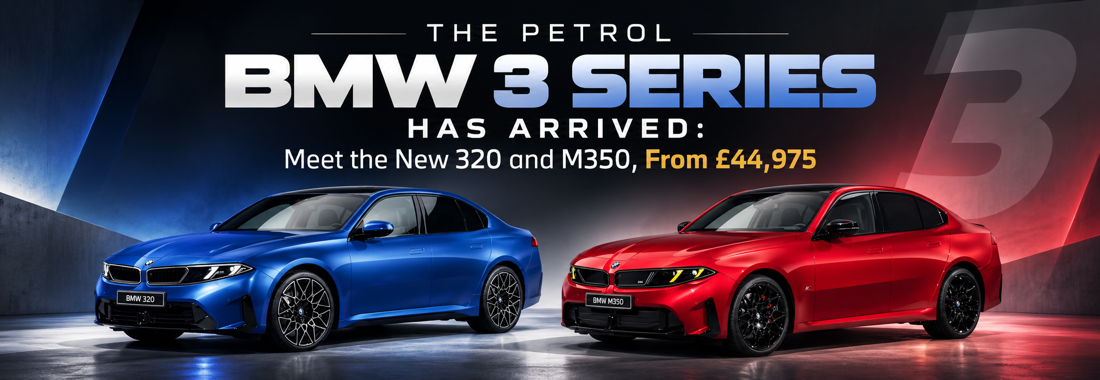
The Petrol 3 Series Gets the Neue Klasse Treatment
BMW has made a conscious decision to give its petrol and electric 3 Series models almost identical styling.
That means the new 320 and M350 xDrive adopt the same Neue Klasse design language introduced by the i3.
And it works.
The new 3 Series has a distinctive stance, with short overhangs, a more upright front end, a new interpretation of BMW’s kidney grille and headlight treatment, flared wheel arches and a chunky, squared-off rear.
There are still hints of the traditional 3 Series within the design, but BMW has clearly used this generation to move the model towards the next era of the brand.
It looks modern without completely abandoning its heritage.
And perhaps most importantly for traditional BMW fans, there is still a petrol engine underneath that new design.
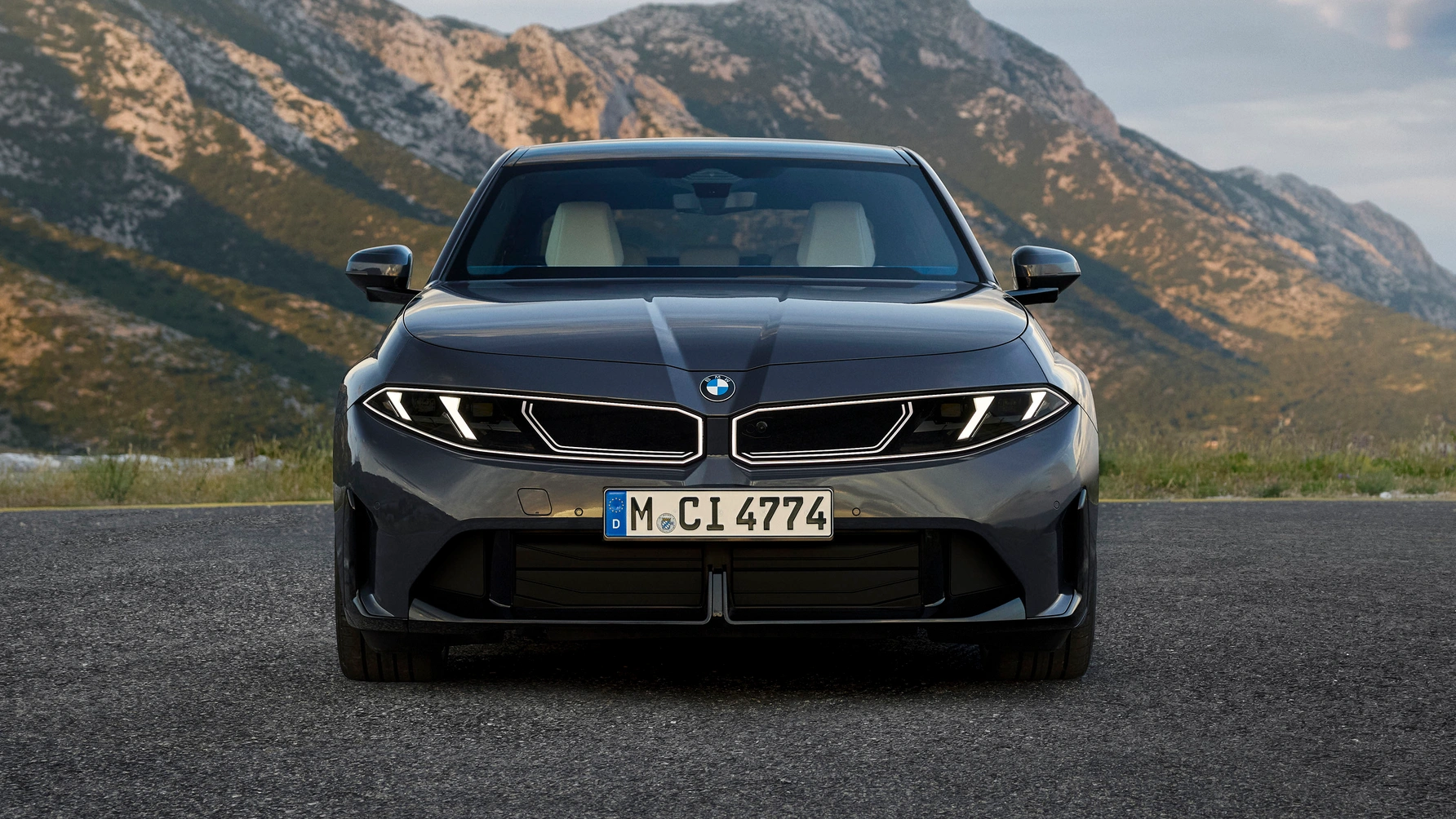
BMW 320: A Petrol Engine That Makes Sense
At launch, the entry point into the petrol range is the BMW 320.
And for once, the badge tells you something useful about what’s under the bonnet.
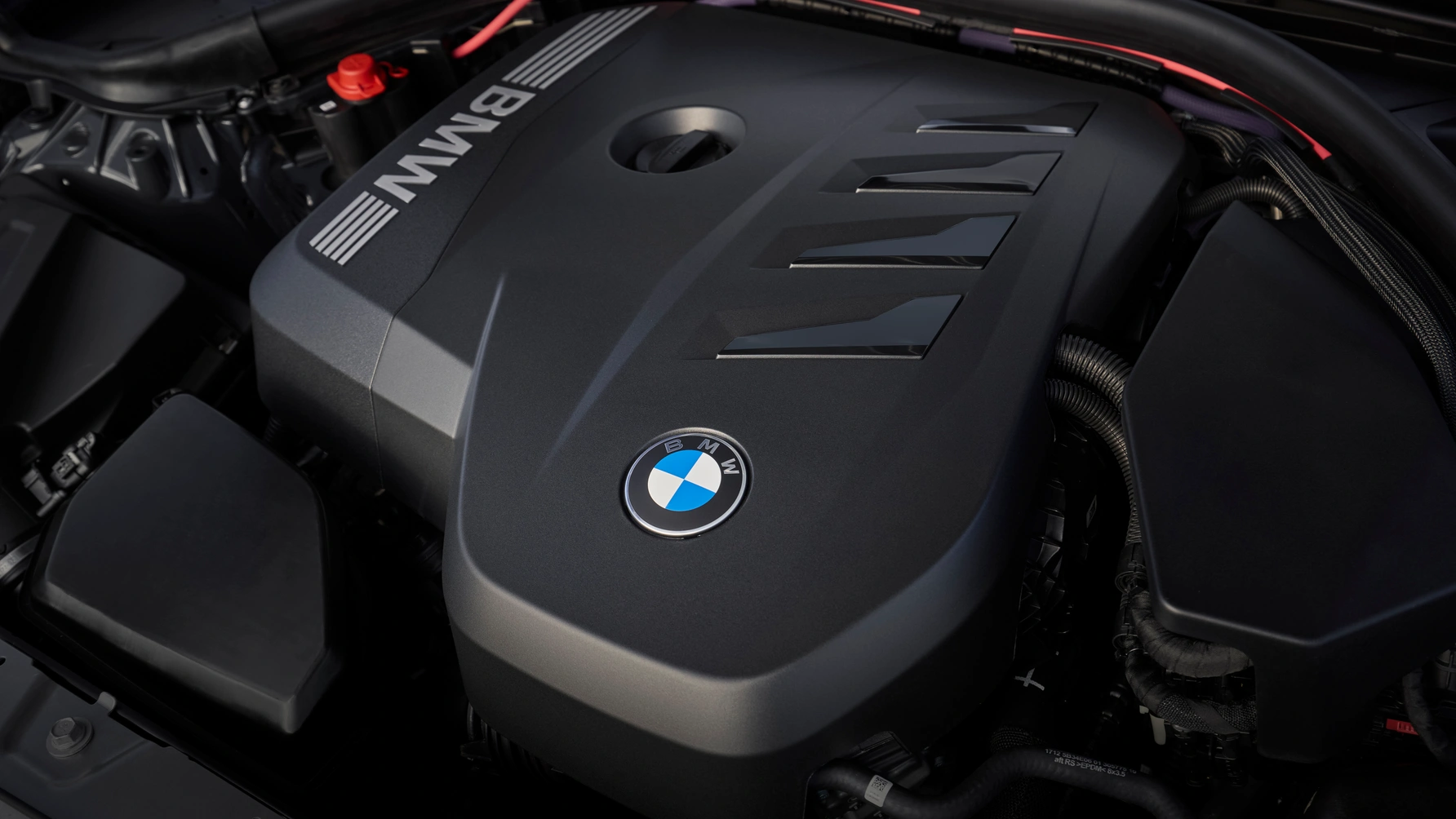
The 320 uses a 2.0-litre four-cylinder petrol engine, rather than relying on an increasingly complicated naming convention that bears little relationship to engine capacity.
Praise be. A BMW badge that actually makes sense.
The engine is paired with 48V mild-hybrid technology and produces 208bhp and 243lb ft of torque.
The performance figures are respectable, too.
The BMW 320 takes 7.4 seconds to reach 62mph and has a top speed of 149mph.
That puts it firmly into the sweet spot for buyers who want a comfortable, modern executive saloon with enough performance for everyday driving, without necessarily needing the outright pace of the M350.
And, importantly, it remains a proper petrol BMW.
BMW M350 xDrive: The Fast One
If the 320 represents the sensible side of the new petrol 3 Series, the M350 xDrive is where things become considerably more interesting.
Under the bonnet is BMW’s 3.0-litre straight-six petrol engine, again supported by 48V mild-hybrid technology.
The result is 437bhp and 428lb ft of torque.
Those numbers translate into a 0-62mph time of just 4.1 seconds, while the top speed is limited to 155mph.
For context, that makes the M350 quicker to 62mph than some previous-generation M3 models.
This isn’t simply a faster version of the standard 3 Series. With its straight-six engine, xDrive all-wheel drive and substantial performance figures, the M350 sits firmly in performance-car territory.
Yet it retains the practicality and everyday usability expected from a 3 Series.
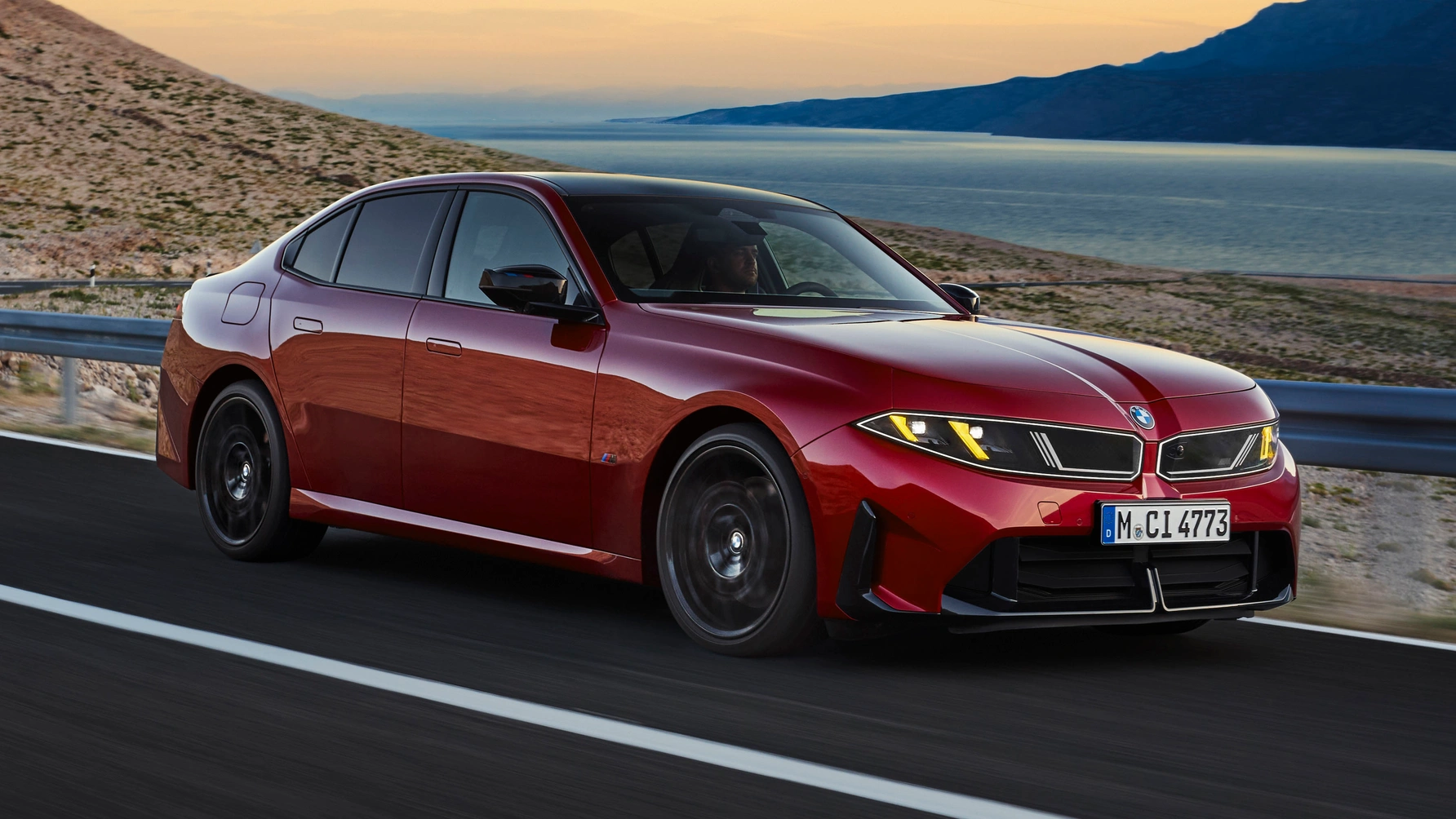
The M350 Even Has a Drift Mode
BMW has also given the M350 xDrive a feature that will appeal to drivers who want to explore its more playful side.
The car gets a Drift Moment function, which can send power exclusively to the rear wheels for controlled oversteer.
In simple terms, the M350 can temporarily behave much more like a rear-wheel-drive performance car.
It is probably not something most owners will be using on their morning commute.
On a track, however, it could add another dimension to the driving experience.
And that is exactly the sort of character BMW has traditionally tried to build into its performance cars.
A Chassis Designed for More Than Straight-Line Speed
BMW hasn’t focused purely on engine power with the new petrol 3 Series.
Both the 320 and M350 receive new passive dampers as standard, along with stiffer mounting points and the familiar BMW philosophy of 50:50 weight distribution.
Adaptive suspension is also available as an option.
That gives buyers the opportunity to tailor the car towards their own priorities.
The 320 can be configured as a comfortable everyday executive saloon, while the M350 can take advantage of its performance hardware to deliver a much sharper driving experience.
The M350 also benefits from its xDrive all-wheel-drive system, giving it the traction required to make full use of those 437 horses.
Bigger Wheels, Stronger Stance
The new 3 Series also gets a choice of wheel sizes depending on the model.
The BMW 320 comes with 18-inch wheels as standard, while the M350 xDrive gets 19-inch wheels.
For buyers wanting an even more aggressive look, 20-inch wheels are available as an option.
The larger wheels work particularly well with the new car’s wider-looking stance and flared arches.
It is a design that should give the M350 a suitably serious appearance without turning the standard 3 Series into something it isn’t.
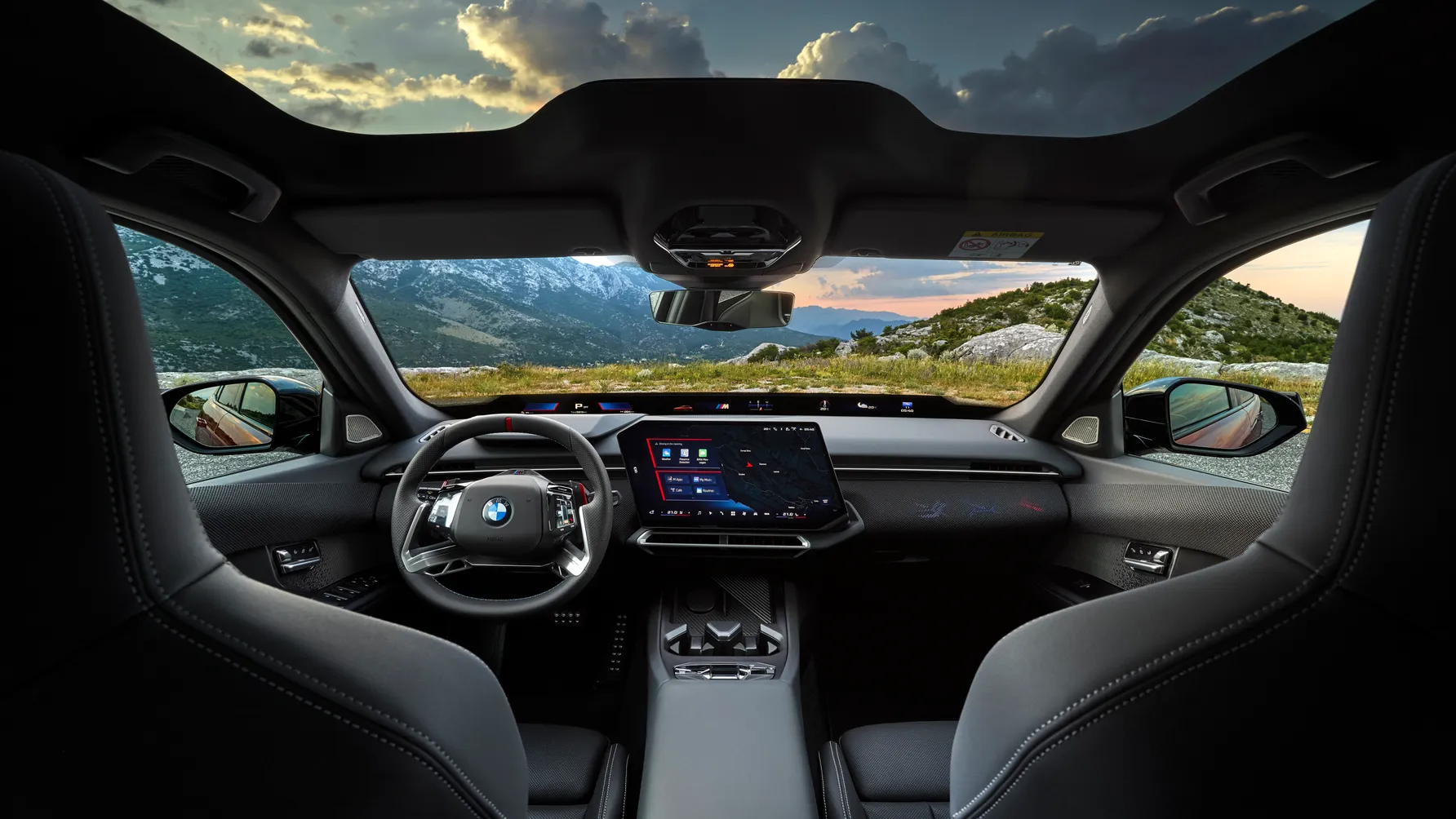
The Interior Brings BMW’s New Technology
Inside, the petrol 3 Series follows the same basic philosophy as the electric i3.
That means buyers get BMW’s latest technology rather than a completely separate interior designed specifically for the petrol cars.
At the centre of the experience is BMW Operating System X, the company’s latest-generation software platform.
There is also BMW’s Panoramic Vision display, which brings information into the driver’s field of vision, while a 3D Head-Up Display is available as an option.
The main infotainment system features a substantial 17.9-inch central touchscreen, while the multifunction steering wheel brings controls closer to the driver.
BMW has also embraced the latest wave of AI technology.
The new 3 Series features Amazon’s Alexa+, adding another layer of voice interaction and artificial intelligence to the cabin.
Whether every driver actually wants AI integrated into their car is another question, but it shows just how quickly the definition of a modern premium car is changing.
The engine is still important.
But software is becoming just as significant.
The Petrol Cars Get a Slightly Bigger Boot
There is also a small practicality advantage to choosing one of the petrol versions.
The new BMW 320 and M350 have 450 litres of boot space, compared with 420 litres in the electric i3.
The electric car does, however, have an additional 31-litre front boot.
So while the petrol cars offer more conventional rear boot space, the i3 makes better use of the space available by adding storage at the front.
For most 3 Series buyers, though, the 450-litre boot of the petrol models should be more than sufficient for everyday use.
The Electric BMW i3 Range Gets More Interesting Too
While BMW is launching the petrol 3 Series, the company has also revealed more information about the electric i3.
The i3 range will initially include the 40 xDrive and 50 xDrive.
The i3 40 xDrive produces 369bhp and 384lb ft of torque, taking it from 0-62mph in 5.4 seconds.
It uses an 82.8kWh battery and has a claimed range of up to 441 miles, while DC charging can reach up to 300kW.
Then there is the more powerful i3 50 xDrive.
That model produces 463bhp and 476lb ft of torque, allowing it to reach 62mph in just 4.7 seconds.
It uses a larger 108.7kWh battery and has a claimed range of up to 566 miles.
Thanks to its 800V architecture, the i3 50 can also charge at up to 400kW.
BMW is also preparing an even more powerful i3 M60 xDrive, which should take the electric 3 Series firmly into performance territory.
BMW 320 vs M350 xDrive: Which One Makes More Sense?
The two petrol models are aimed at very different buyers.
The BMW 320 is the more accessible option, starting at £44,975. Its 2.0-litre four-cylinder engine produces 208bhp and 243lb ft, with a 0-62mph time of 7.4 seconds.
It is the car for someone who wants the latest 3 Series design, technology and driving experience without needing extreme performance.
The M350 xDrive, meanwhile, starts at £66,785.
For the additional money, you get BMW’s 3.0-litre straight-six, 437bhp, 428lb ft, xDrive all-wheel drive and a 0-62mph time of just 4.1 seconds.
The difference isn’t subtle.
The 320 is a premium executive saloon with enough performance for most people.
The M350 is a performance car wearing a 3 Series suit.
How Much Does the New BMW 3 Series Cost?
The new petrol range starts at £44,975 for the BMW 320.
That makes it slightly more affordable than the electric i3 40 xDrive, which starts at £47,925.
The i3 50 xDrive starts at £53,425.
At the top of the petrol range sits the M350 xDrive at £66,785.
That gives BMW customers a surprisingly broad range of choices.
You can have a conventional petrol 3 Series, a high-performance petrol 3 Series or one of the increasingly capable electric alternatives, all sharing the same broad design philosophy.
Why the New 3 Series Matters So Much to BMW
The numbers behind the 3 Series explain why BMW has been so careful with this new generation.
More than 18 million 3 Series models have been sold worldwide since 1975.
That makes it the most successful model in BMW’s history.
For decades, the 3 Series has been the car that defined BMW for many buyers.
It has competed against the Mercedes-Benz C-Class and Audi’s equivalent models, while establishing its own reputation for performance, handling and everyday usability.
Now BMW is asking it to do something even more difficult.
The new 3 Series needs to preserve that identity while helping BMW move into a new era.
One Design, Two Powertrain Philosophies
Perhaps the most interesting decision BMW has made is to stop visually separating its petrol and electric 3 Series models.
The 320 and M350 look like they belong to the same family as the i3.
That might sound obvious, but it represents a significant change in strategy.
BMW is effectively saying that the future of the 3 Series doesn’t have to mean abandoning the traditional petrol buyer.
You can have the Neue Klasse design, the latest technology and BMW’s newest interior while still choosing a four-cylinder or straight-six petrol engine.
At the same time, buyers who are ready for electric power can choose the i3 without feeling like they’re buying a completely unrelated car.
The New BMW 3 Series Has a Lot to Prove
The 3 Series has an enormous reputation to live up to.
It has spent decades becoming one of the most recognisable and respected names in the premium car market.
The new generation represents one of the biggest changes the model has ever undergone.
The BMW 320 keeps the traditional petrol formula alive with a 2.0-litre four-cylinder engine and 48V mild-hybrid technology.
The M350 xDrive takes things much further with its 3.0-litre straight-six, 437bhp and 4.1-second 0-62mph time.
And alongside them, the electric BMW i3 demonstrates just how far the Neue Klasse platform can go in terms of range, charging and performance.
Final Thoughts
The new petrol BMW 3 Series is arriving at an interesting moment.
The industry is moving rapidly towards electrification, yet there remains a strong demand for conventional petrol cars, particularly among buyers who value performance, sound and the character of an internal-combustion engine.
BMW has responded by giving those buyers a choice.
The £44,975 BMW 320 brings the latest generation of design and technology to the traditional 3 Series formula, while the £66,785 M350 xDrive offers performance that would have been firmly in M-car territory not too long ago.
Meanwhile, the electric i3 shows what the same design philosophy can deliver without a petrol engine at all.
For a model with more than 18 million sales behind it, this is more than another generation change.
The new BMW 3 Series is BMW’s attempt to prove that one of its most important cars can evolve without losing what made it successful in the first place.
And if the new 320 and M350 can deliver on that promise, the 3 Series may have plenty of life left in it yet.